Late Mughal Empire Mughal Art Mughal Wind Flower Decorative Relief

Late Mughal Empire Mughal Art Mughal Wind Flower Decorative Relief
This relief is an outstanding representative of the late Mughal art, unique style, no longer the pursuit of symmetry in the early design. The work depicts the irises in banana leaves swaying in the wind, and the design is full of imagination. The pattern of banana leaves grows from three layers of spiny thistle leaf ornaments (acanthus leaves), and the composition is vivid and dynamic. The relief is made of mottled red sandstone, typical of the Mathura, Sikri and Chunar regions of northern India. Another part of the artwork (the associated panel) is now in the Louvre in Paris.
Eighteenth Century European Porcelain Blue and White Porcelain Cover Jar

Eighteenth Century European Porcelain Blue and White Porcelain Cover Jar

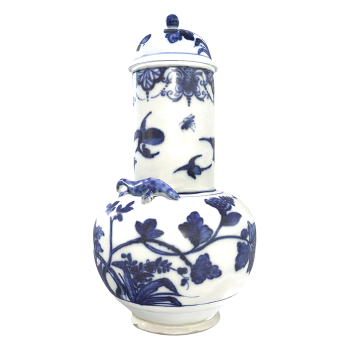
This work of art is a blue and white porcelain covered pot (Deckelvase), which was made by the German Meissen Porcelain Factory (Meissen) and was completed between 1725 and 1726. It is a piece of porcelain as the material of art, its decoration using the underglaze blue (Unterglasurblau) technique. The special feature of this covered jar is that it has a lizard decoration attached to its shape, which adds a unique beauty of the combination of nature and art.
Eighteenth Century European Porcelain Golden Lion Soup Bowl Porcelain

Eighteenth Century European Porcelain Golden Lion Soup Bowl Porcelain

This mason porcelain bowl is made in imitation of a chinese design. The Mason Porcelain Factory began to imitate Chinese porcelain in the early 18th century to cater to the European market's fondness for oriental art. This porcelain soup bowl with a lid is decorated with a yellow lion pattern and uses superb porcelain craftsmanship. This decorative style combines European baroque art and oriental decorative elements, reflecting the artistic achievements of Meissen porcelain factory at that time.
Eighteenth Century European Porcelain Blue and White Porcelain Box with Lid

Eighteenth Century European Porcelain Blue and White Porcelain Box with Lid

The blue and white porcelain box with lid is a piece of exquisite porcelain made by the German Meissen Porcelain Factory (Meissen), created in about 1730. This work is a porcelain box with a lid, and its design is inspired by Japanese art style, reflecting the European imitation of East Asian art at that time.
18th Century European Porcelain Taoist Theme Bowl

18th Century European Porcelain Taoist Theme Bowl

This mason porcelain bowl is made in imitation of a chinese design. The Mason Porcelain Factory began to imitate Chinese porcelain in the early 18th century to cater to the European market's fondness for oriental art.
Eighteenth Century European Porcelain Porcelain Bowl

Eighteenth Century European Porcelain Porcelain Bowl

This mason porcelain bowl is made in imitation of a chinese design. The Mason Porcelain Factory began to imitate Chinese porcelain in the early 18th century to cater to the European market's fondness for oriental art.
Kakadu Parrot of Mason Porcelain

Kakadu Parrot of Mason Porcelain

John Joachim Candler (Johann Joachim Kaendler) was one of the most famous porcelain sculptors of the first half of the 18th century, who designed many exquisite porcelain works for the Mason Porcelain Factory. Kakadu parrot is one of his masterpieces. This porcelain sculpture shows a lifelike Kakadu parrot sitting on a tree stump decorated with flowers and leaves. The sculpture uses multi-color painting technology to make the parrot's feathers and details on the stump more vivid. Mason Porcelain Factory was one of the first manufacturers of hard porcelain in Europe, founded in 1710.
18th Century European Porcelain Ceramic Guanyin Statues

18th Century European Porcelain Ceramic Guanyin Statues

This ceramic Guanyin statue was made by Johann Gregorius Höroldt, a German painter and porcelain painter. Holdert is known for his Chinese style decoration (Chinoiserie) designs.
18th Century European Porcelain Guanyin Statues

18th Century European Porcelain Guanyin Statues

This Guanyin image is one of the early works of the Mason Porcelain Factory and is based on a Chinese prototype. The porcelain was made by Johann Gregorius Höroldt, a German painter and porcelain painter. Holdert is known for his Chinese style decoration (Chinoiserie) designs.
Eighteenth Century European Porcelain Mason Porcelain Blue and White Porcelain Vase

Eighteenth Century European Porcelain Mason Porcelain Blue and White Porcelain Vase

This vase is one of the representative works of Mason porcelain. Mason Porcelain Factory was one of the first manufacturers of hard porcelain in Europe, founded in Germany in 1710. This vase was made between 1722 and 1723 and was decorated with blue and white. Blue and white decoration is a method of drawing a pattern with blue pigment on porcelain and then firing it under the glaze.
18th Century European Porcelain Chinese Style Fine Neck Vase

18th Century European Porcelain Chinese Style Fine Neck Vase

This thin-necked vase of Mason porcelain was made by Mason porcelain factory in 1721. Mason Porcelain Factory is one of the earliest hard porcelain factories in Europe, established in 1710. Mason porcelain is famous for its exquisite craftsmanship and unique design, especially its blue and white underglaze decoration. The porcelain was made by Johann Gregorius Höroldt, a German painter and porcelain painter. Holdert is known for his Chinese style decoration (Chinoiserie) designs.
Eighteenth-century relics have field underglaze color vase

Eighteenth-century relics have field underglaze color vase

This Japanese vase, produced in Yoda, was from 1700 to 1720. The material is porcelain, and the decoration uses underglaze blue and white blue, overglaze color and gold. This covered vase is in the Imari Style.
Qing Dynasty Period Riverview Jingde Porcelain Lantern
Qing Dynasty Period Riverview Jingde Porcelain Lantern

This is a Chinese Qing Dynasty lantern decorated with river landscape. Made in Jingdezhen, China, early 18th century. The material is porcelain, with overglaze painting (famille verte) and gold color decoration. This exhibit is numbered PO 3318 and is in the porcelain collection of the Dresden State Art Collection.
18th century Qianlong period palace carved lacquer box

18th century Qianlong period palace carved lacquer box

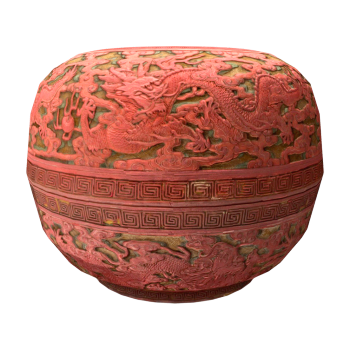
The carved lacquer box was created by the Qing court workshop during the period of Emperor Qianlong. Carving lacquer is a fine traditional process, made by multi-layer lacquer coating and complex engraving technology. These crafts usually display superb skills and exquisite design, symbolizing imperial power and nobility. This carved lacquer box is currently in the collection of the Jaguelon University Museum in Poland.
The Bishop's Crown of Poland in the 18th Century

The Bishop's Crown of Poland in the 18th Century

In the collection of the Miekhov Land Museum, there is an 18th-century Polish bishop's crown (Miter). This bishop's crown is made of steel and cloth, decorated with gold thread, precious stones and other precious materials. Its exquisite decoration and unique design not only show the superb skills of religious art at that time, but also symbolize the religious authority and noble status of the wearer. This bishop's crown is not only a religious article, but also an important cultural and historical heritage.
John Adam Moser Clan Emblem Seal

John Adam Moser Clan Emblem Seal

John Adam Moser was an 18th century German jurist, administrative official, and writer who had a profound understanding and contribution to the legal and administrative system of his time. This seal not only serves as proof of personal identity, but also reflects the level of seal art and craftsmanship at that time. The handle is engraved with the words "1751" to indicate the year of production.
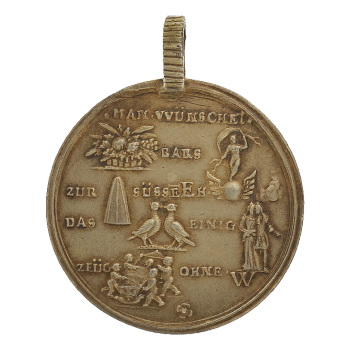
18th Century Gilded Gold and Silver Medal Commemorative Medal
18th Century Gilded Gold and Silver Medal Commemorative Medal

The inscription on this 18th century medal expresses good wishes for love and marriage, and the design of the visual puzzle adds artistic and entertaining elements. The material and exquisite craftsmanship of gilded gold and silver indicate that this is a customized souvenir for special occasions or important figures. At that time, such medals were given as gifts to show respect or celebrate. It is currently housed in the Heiligenkreis Monastery Museum.
Maria helps with the district seal

Maria helps with the district seal

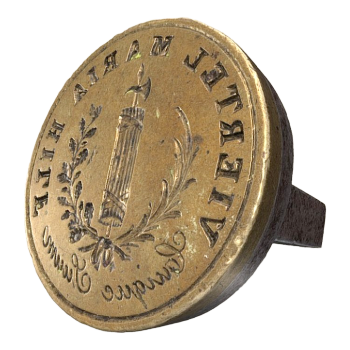
This is a stamp on the iron handle of the Maria Help Zone, with a copper stamp plate engraved with fasces and laurel branches, and "Cuique Sum" written in cursive script below, surrounded by "VIERTEL MARIA HILF". This seal has a height of 5.2 centimeters and was made in the 18th or 19th century.
18th century Qing Dynasty copper doll "Qing Dynasty Mechanical Doll"

18th century Qing Dynasty copper doll "Qing Dynasty Mechanical Doll"

This cultural relic is an 18th century Chinese mechanical doll from the Qing Dynasty, depicting a man sitting on a lion. This man holds a spear and sits on a mythical lion (also known as the guardian lion of China). The exquisite craftsmanship of this doll is astonishing, and it is a testament to the professional skills and artistic talent of its creator or creator. The uniqueness of this doll lies in its spring driven mechanism, which allows you to appreciate the mobility of these small statues and marvel at the exquisite craftsmanship of past craftsmen even after being restored by the managers of the Krakow National Museum.
The "Cloisonn é Incense Burner" produced during the Kangxi period of the Qing Dynasty
The "Cloisonn é Incense Burner" produced during the Kangxi period of the Qing Dynasty

This Chinese cultural relic is a type of incense burner, belonging to the category of metal handicrafts. It was made by craftsmen in Jingdezhen and is part of a set of altar equipment, using cloisonn é craftsmanship. This artifact is currently located on the staircase of Gallery 17 at the Fitzwilliam Museum, University of Cambridge. This artifact was donated by John McClane. It was made around the 18th century, specifically during the Kangxi period.
Enamel snuff bottles from the Yongzheng period of the Qing Dynasty in the 18th century

Enamel snuff bottles from the Yongzheng period of the Qing Dynasty in the 18th century

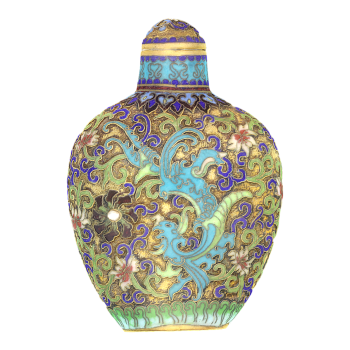
A snuff bottle is a container for holding snuff, which is delicate, compact, and easy to carry. During the Qing Dynasty, inhaling snuff became a popular trend among all social classes, and the pursuit of the material and craftsmanship of snuff bottles was even more extreme. The National Palace Museum in Taipei has a large collection of the most exquisitely crafted snuff bottles from the Qing Dynasty. This Yongzheng style enamel snuff bottle is made of milky white glass in the shape of bamboo nodes, with a color resembling spotted bamboo. There are brown spots on the green and yellow ground, and two small insects on the bamboo nodes. The bottom is painted with Lingzhi Kai Guang, and the red version of the regular script "Made in Yongzheng Year" is inside.
The 18th century cultural relic seal "The Annunciation Seal of the Virgin Mary" in Bratislava

The 18th century cultural relic seal "The Annunciation Seal of the Virgin Mary" in Bratislava

This artifact is an 18th century seal of the Annunciation of the Virgin Mary from the Bratislava Monastery. This seal is made of silver and is installed on an iron device for a sealing machine. The height of the seal is 5.1 centimeters. Visit this cultural relic at the Franciscan Church of the Annunciation in Bratislava. The church is the oldest religious building in Bratislava, originally Gothic in style, but after multiple damages and reconstructions, the current nave arch is Renaissance style. Inside the church, you can see the Baroque style main altar with a glass painting of the Virgin Mary on it. I hope this information is helpful to you!
Joseon Dynasty Scroll Box "Painted Wood Dragon and Phoenix Scroll Box"

Joseon Dynasty Scroll Box "Painted Wood Dragon and Phoenix Scroll Box"

This set of scroll boxes is a Korean cultural relic from the Joseon Dynasty (1392-1910), and its name is "Painted Wood Dragon and Phoenix Scroll Box". The scroll box is very finely decorated. The scroll is printed with gorgeous dragon and phoenix patterns, mother-of-pearl inlaid on lacquered wood and twisted brass and copper wires. This scroll box is used by the royal family to keep scrolls or important documents. It measures 11.5 x 11.6 x 87cm (the scroll box was made from the 1700 s to the 1800 s) and is in the collection of the Cleveland Museum of Art.